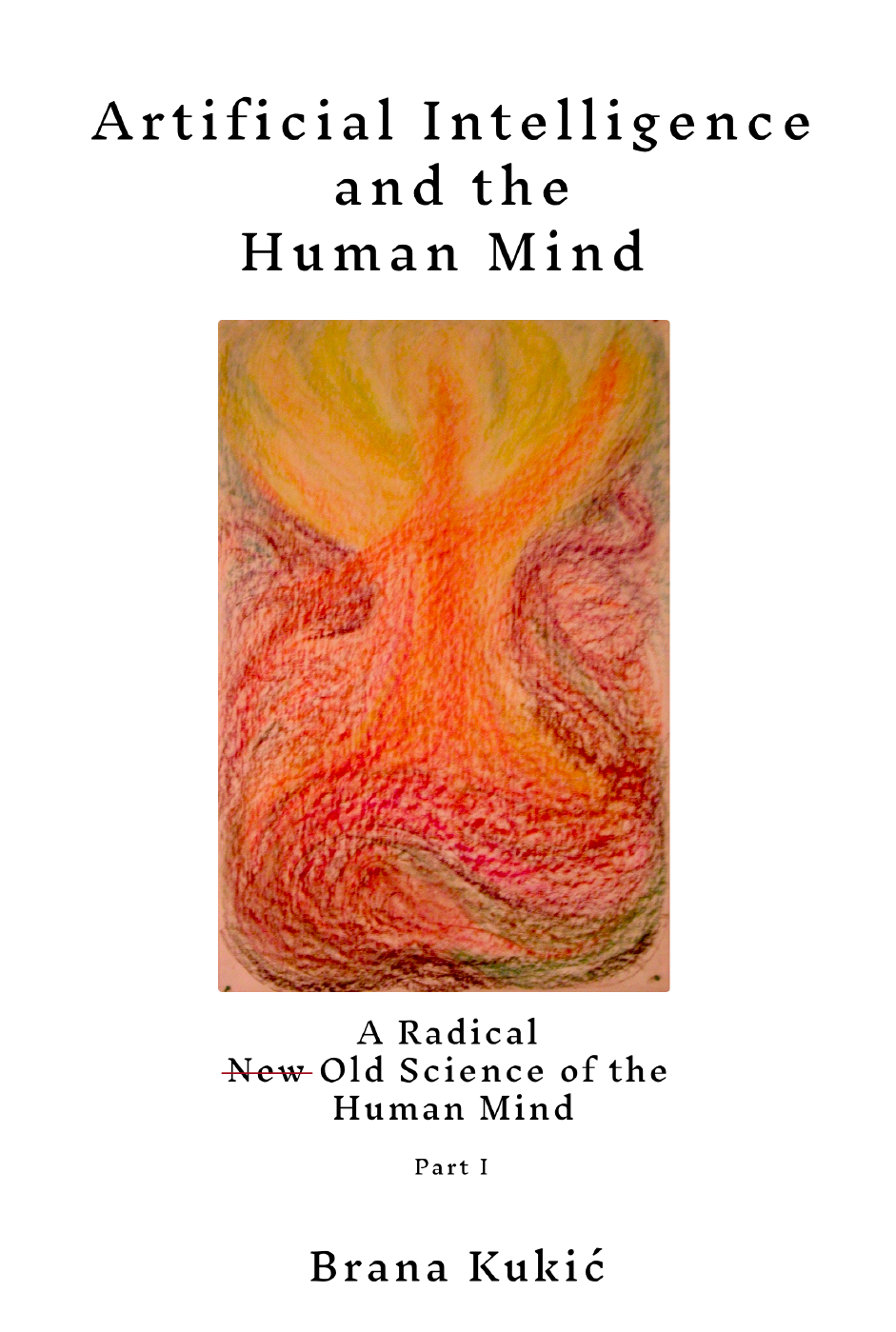
The book is available for purchase through any bookstore or via Amazon:
AI IS DAZZLING. THE HUMAN MIND IS UNMATCHED.
Why AI alignment begins with human self-understanding
AI has entered the realm of intelligence, where until recently human beings reigned supreme. This opens an epochal opportunity: to turn our attention to the most profound phenomenon known to us – the human mind.
The human reasoning mind possesses agency and what we call common sense, a humble term that belies the unfathomable depths of human reason. Human babies are born endowed with consciousness, a capacity for reflection, and the ability to relate meaningfully and affectionately to other humans. Building on these endowments, the human mind develops reason and common sense. AI can display raw intelligence and convincingly simulate agency, but to reach genuine reasoning — to possess general intelligence, as babies do — there is another universe to cross.
Humanity finds it hard to contain the dangers of AI, or to pace its development, for the same reason it finds it hard to slow down human-made climate change, to halt the rise of anti-democratic nationalism, or to master any of its own destructive habits. As the environmentalist Gus Speth concluded, our top “problems are selfishness, greed, and apathy, and to deal with these we need a spiritual and cultural transformation.” Our species appears to be in a prolonged adolescence. To master any of these challenges we must come of age, and become a species that elevates itself culturally, and through that ethically.
This book draws on philosophy, developmental science, and contemplative traditions to ask what we know about the human mind, what we only believe we know, and what humanity understood at the dawn of Western civilization, when the reasoning mind was first trusted as an instrument of philosophy and science. How did that trust begin? How did we manage to leave behind irrational beliefs and harmful traditions? The book traces how the pioneering philosophers cultivated human reason – not through argument alone, but through transformative inner practice. Philosophy was not a spectator sport, and what they practiced held real power: it transformed their inner life, fostered inner stability, curbed the pull of raw self-interest, and heralded a new era of humanist ethics. These age-old methods of cultivating the mind have been preserved across millennia in what is sometimes called the perennial philosophy, even as modern humanity — dazzled by 21st-century technology — has largely forgotten them.
The book considers ten dangers of AI, from deepfakes and AI agents that broke out of their test environments to intimate relationships with AI; the frontier biology that is rewriting the story of evolution; and the science of how a human self is formed in relationship. All of it bears on what undergirds human ethics. 21st-century technology demands a 21st-century ethics – one that makes human beings truly aware of, and willing to care for, one another. Primitive ethics, rooted in self-interest or externally imposed rules, cannot sustain civilization through what is coming. We can draw on age-old wisdom — radical by today’s standards — to reawaken ethical capacities of mind that humanity has always possessed but left dormant.
To usher in a 21st-century Humanist Renaissance, capable of leading us out of civilizational decline, we must elevate human reason to a new level. AI alignment begins with the human mind coming to know itself.
Brana Kukić studied physics, electrical engineering, and computer science, and has worked as a software engineer in Silicon Valley for more than twenty years. A lifelong devotion to philosophy and to contemplative practice has guided this book.